
The complete guide
How To Choose A Mini Cordless Lawn Mower For A Small Lawn
The problem with buying a full-size mower for a small lawn
Plenty of people end up with a mower that is far too big for the grass they own. It happens because mowers at the hardware store are mostly built for a standard suburban block, and the small ones get pushed to the end of the aisle. So you take home a wide-deck machine, wrestle it around a courtyard, scuff the fence turning it, then spend the rest of the year trying to find somewhere to park it.
A small lawn has different problems to a big one. The issue is almost never power. It is access, weight and storage. You need something that fits between the bed and the path, that you can lift over a step, and that folds away without taking a whole corner of the garage.
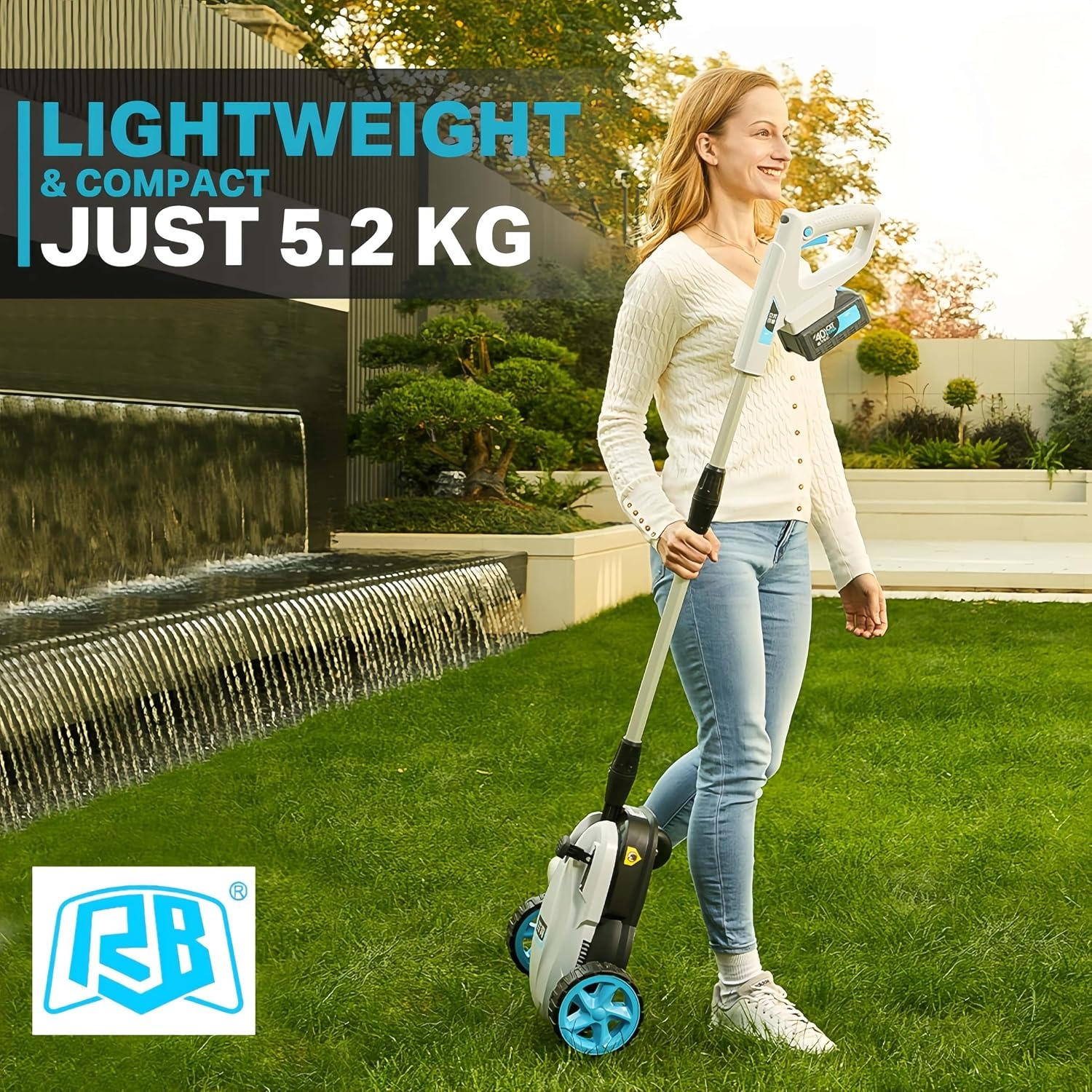
That is the gap a mini cordless lawn mower fills. A 22 cm cutting width sounds narrow until you measure the strip of grass beside your driveway and realise it is only two passes wide anyway. At 6.03 kg, this one is lighter than a full basket of wet washing.
How a battery mower actually works
The basic job has not changed. A blade spins fast under a deck and slices the grass. What changed is the power source.
Petrol mowers need fuel, oil, a pull cord and a service every season. Corded electric mowers need an extension lead that you will eventually run over. Battery mowers remove both problems. You slide in a charged pack, press the button and go.
This model uses a brushless motor. In an older brushed motor, small carbon blocks press against a spinning contact to deliver power. They wear out, they make heat, and they waste energy. A brushless motor does the switching electronically instead. Less friction means more of the battery's charge reaches the blade, and the motor tends to last longer. For a small mower, that means better run time from a modest 2.0Ah pack.
The blade here spins at 6000 RPM and has a mulching shape. Rather than pushing clippings into a catcher, it keeps them circulating under the deck and chops them repeatedly until the pieces are small. Those pieces fall into the lawn and break down over the following weeks. You skip the emptying, and the lawn gets a little of its nitrogen back.
The catch with mulching is that it works best on short, dry grass. Mow often, cut a little each time, and you will barely notice clippings. Leave it three weeks and you will see windrows.
Who this suits
Think about the shape of your grass, not just the area.
This mower makes sense if you have a townhouse courtyard, a front strip, a small back lawn, a verge or a few separate patches around paths and paving. It suits apartments with a ground-floor garden, holiday places where the lawn only needs a tidy every few weeks, and anyone who has decided their current mower is simply too heavy to keep using.
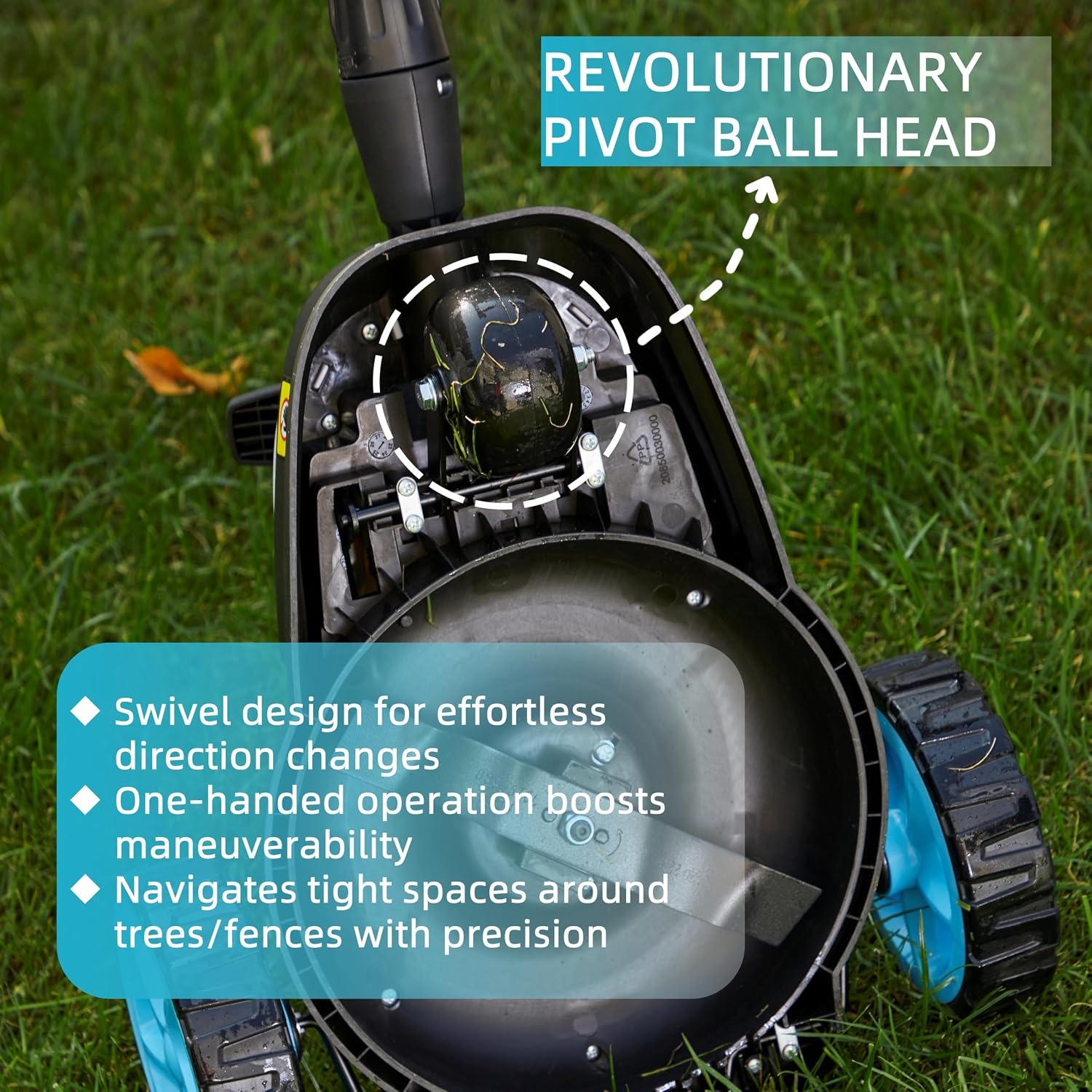
It also suits gardens with a lot of obstacles. Raised beds, pot clusters, a clothesline post, a bird bath. A narrow deck and a ball-head handle let you work around those without a three-point turn every metre.
It is not the machine for a quarter-acre block, a sloping paddock or long neglected growth. The supplier suggests lawns up to around 50 square metres, which is a sensible limit given the battery life of about an hour. Stretching a small mower across a big lawn just means recharging in the middle of the job and wearing out the blade faster.
Choosing cutting height
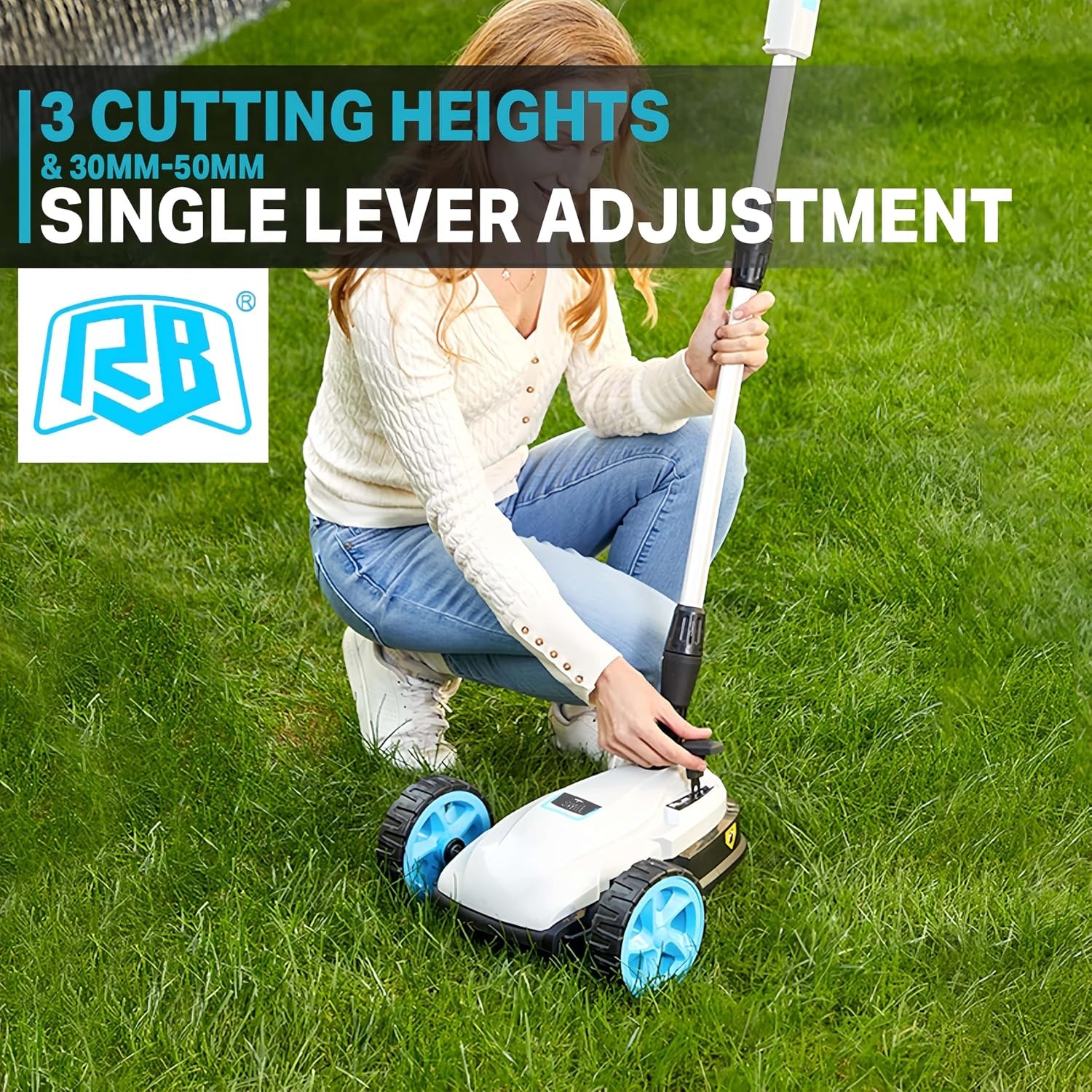
Three height settings, from 30 mm to 50 mm, cover most small-lawn situations.
The general rule is to never remove more than about a third of the blade length in one cut. Scalping the lawn stresses the plant, exposes the soil and gives weeds a window. Taller grass shades its own roots, which helps the lawn stay green through dry weeks and makes it harder for weeds to establish.
In practice, most people should run the highest or middle setting through the warm growing months and only drop lower when growth slows or they want a sharper look for a particular weekend. Shady lawns do better left longer. Lawns in full sun through a hot summer also do better left longer.
If the grass has got away from you, do it in stages. Cut on the high setting, wait a few days, then drop a notch. The lawn recovers much better than it would from one brutal cut.
Weight, handling and why they matter more than you expect
Most of the complaints people have about mowing are physical, not technical. The machine is heavy to push uphill. It is awkward to turn. It is a struggle to lift over the back step.
Six kilograms changes the whole experience. You can carry the mower in one hand to the front yard instead of walking it around the side path. You can lift it onto a balcony. You can put it in a car boot without a second person.
The flexible ball-head handle adds to that. A fixed handle forces you to square your body up to the machine. A pivoting one lets you push one-handed while reaching over with the other, or swing the mower sideways to trim along an edge. For anyone with a sore shoulder or limited grip strength, that flexibility is the difference between mowing being a chore and being genuinely easy.
Looking after it
Battery mowers are low maintenance but not no maintenance.
Take the battery out before you do anything to the deck. That is the single most important habit. With the pack removed, the blade cannot start.
After each cut, scrape or brush clippings off the underside and from around the blade. Damp grass sticks, dries hard and slowly reduces airflow under the deck, which makes the cut worse. Let the mower dry before putting it away, and avoid hosing water into the motor area.
Check the blade a couple of times a season. A sharp edge slices grass cleanly, which is why the tips stay green. A blunt or chipped edge tears them, and torn tips go brown within a day or two. If the blade is bent, replace it rather than trying to straighten it.
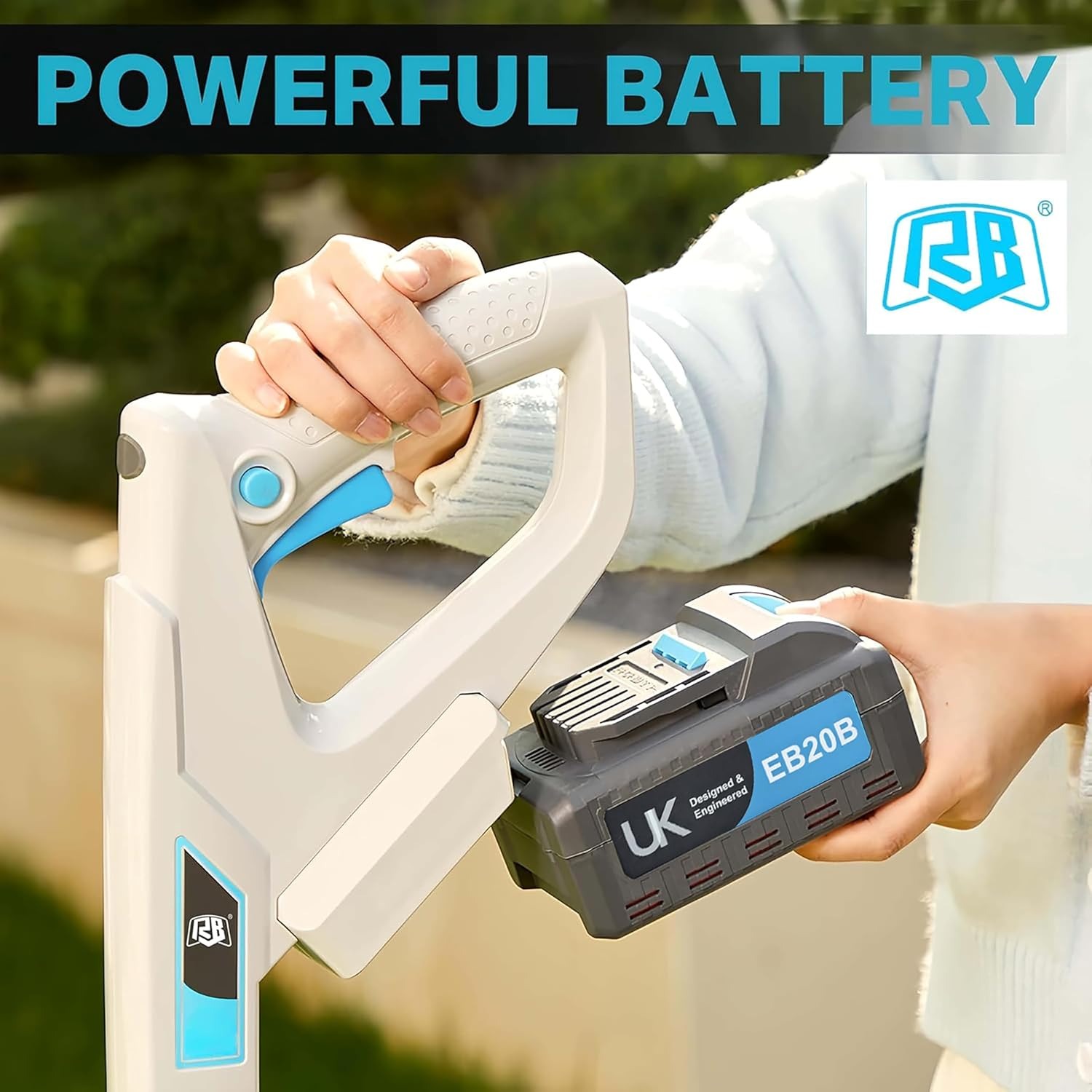
Treat the battery kindly and it will last. Store it indoors, keep it out of frost and off hot concrete in summer, and top it up every few months over winter rather than leaving it sitting empty. Charge it with the supplied charger.
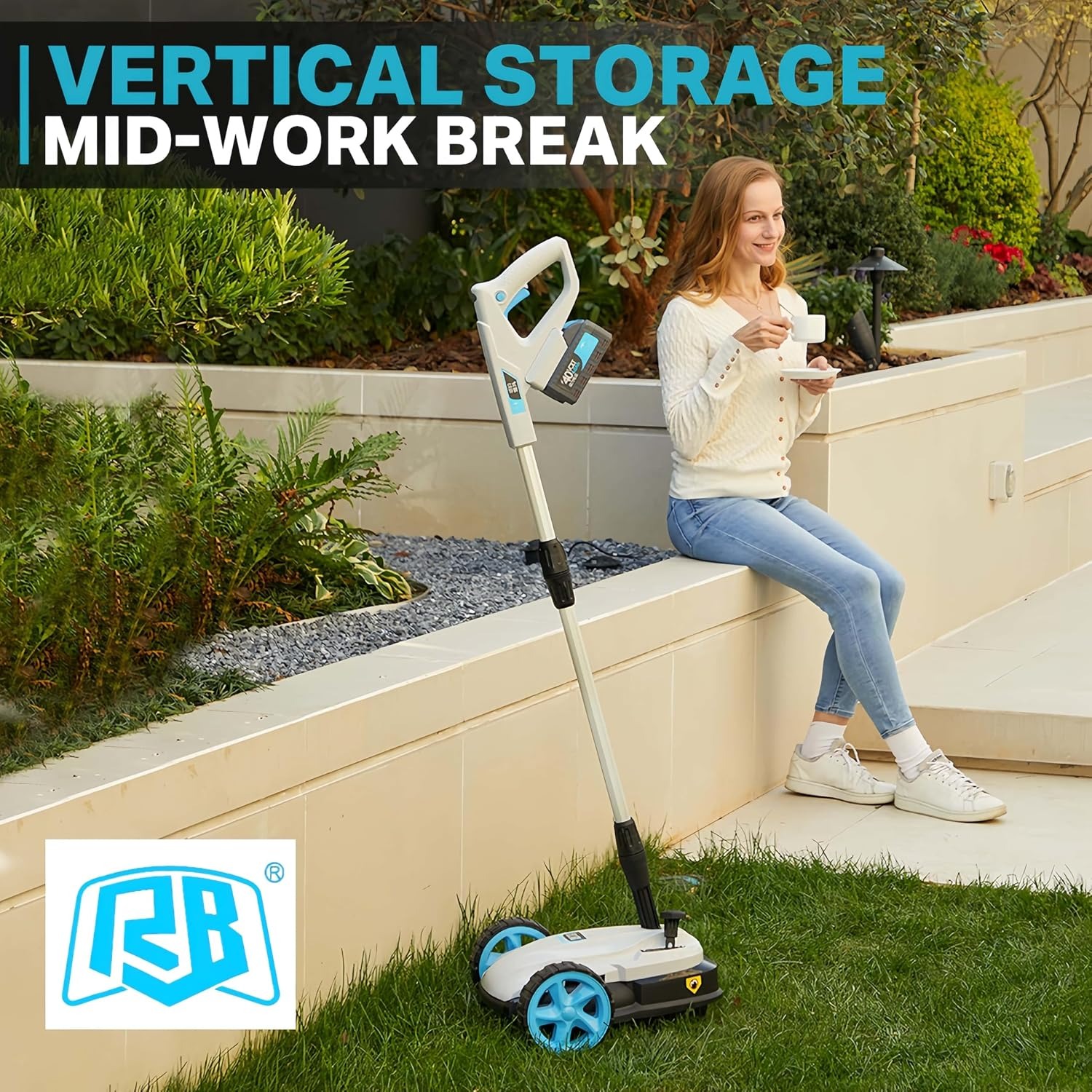
The handle folds for storage, so the mower stands upright against a wall. That is worth doing even if you have space, because it keeps the deck off the floor and the handle out of the way.
Small things that make mowing easier
Walk the lawn first and pick up anything hard. Stones, dog toys, the hose fitting someone left out. A blade hitting a rock at 6000 RPM is the fastest way to ruin it.
Mow in a different direction each time. Always cutting the same way presses the grass over in one direction and leaves ruts in the soil over a season.
Cut when the lawn is dry. Early evening is often better than early morning because the dew has gone.
Keep a rough schedule rather than waiting until the lawn looks bad. Little and often is easier on you, easier on the mower and much better for the grass.
The short version
If you have a small lawn, you do not need a big mower. You need a light one that fits, starts without fuss and stores somewhere sensible.
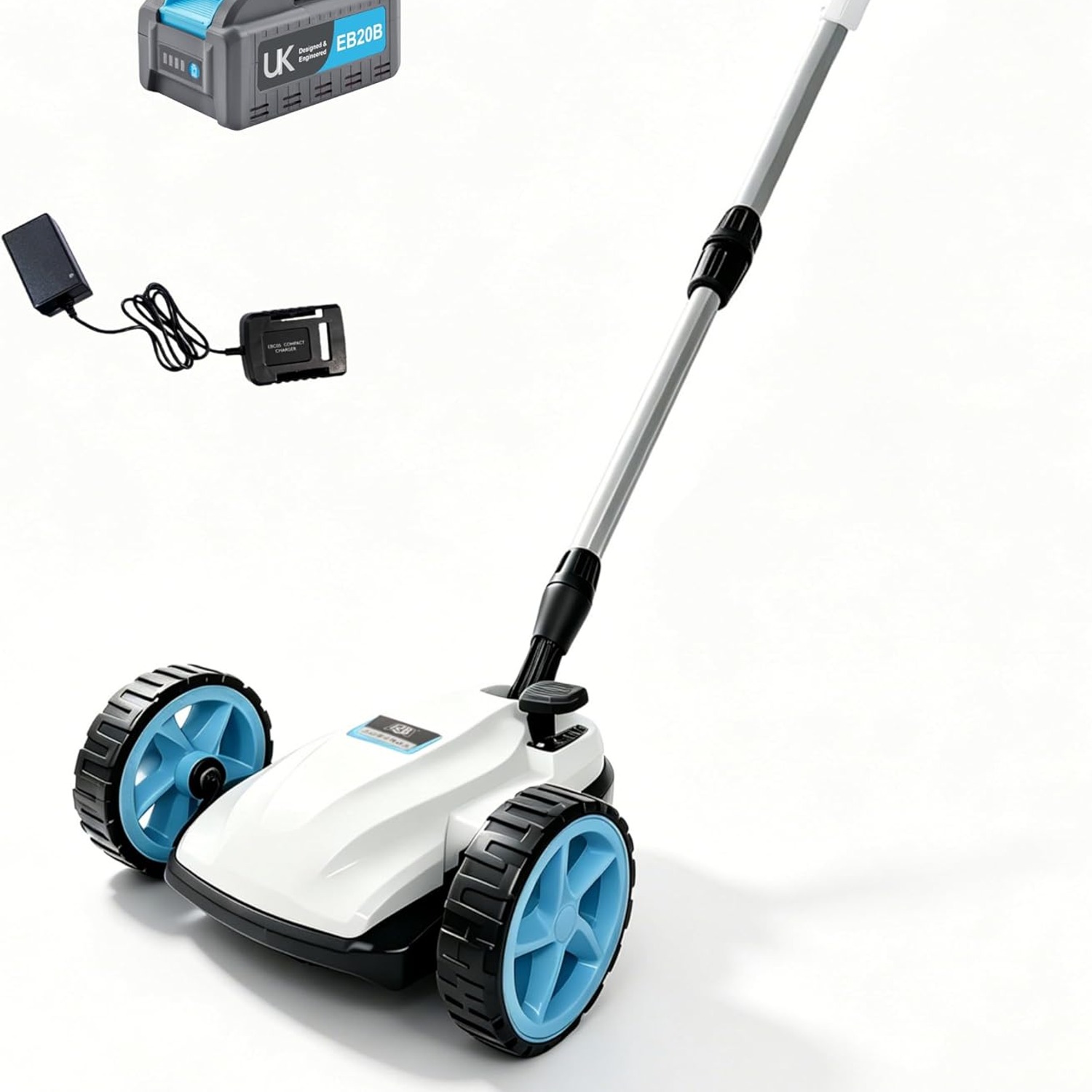
This mini cordless lawn mower cuts a 22 cm path, weighs 6.03 kg, mulches instead of catching, and gives you three heights between 30 mm and 50 mm. The 40V 2.0Ah battery and fast charger come with it, the handle pivots for one-hand steering, and it folds upright when you are done. The machine carries a 24-month warranty with 12 months on the battery.
For a courtyard, a verge or a modest back lawn, that combination covers everything that usually makes mowing annoying.