
The complete guide
Choosing A Corded Electric Lawn Mower For A Small Garden
The problem with buying too much mower
Walk into a hardware shop and the mowers get bigger as you go down the aisle. Wide decks, big engines, self-propelled drives. They look impressive. Then you get one home, try to turn it around a garden bed, and realise your lawn is the size of two parking spaces.
Small gardens have their own set of problems. There is rarely a straight run longer than a few metres. There are fence lines, a clothesline, maybe a path, a tap, a kid's swing. The grass still grows, often faster than you expect, but the machine that cuts it has to be something you can get out, use and put away in under half an hour. Anything heavier than that becomes a chore you keep putting off.
A corded electric mower solves a lot of this by removing the fuss. No petrol can in the shed. No pull start that only works on the fourth attempt. No battery that went flat since you last used it. You plug in, press the button, and the motor runs for as long as you need it to.
How a corded mower works
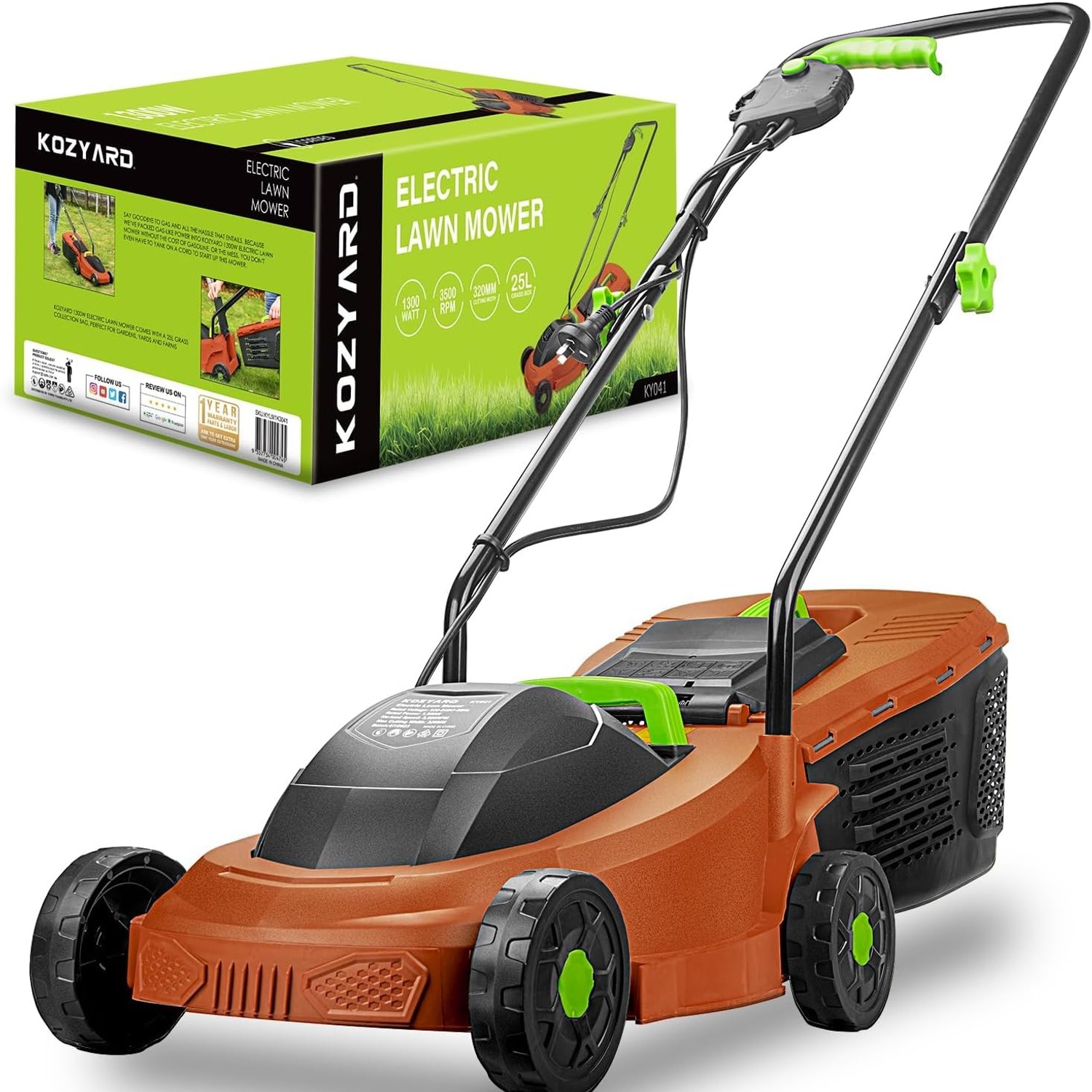
The idea is simple. A mains lead feeds an electric motor, the motor spins a blade under the deck, and the blade cuts the grass as you push the mower forward. In this case the motor is rated at 1300W and the blade sweeps a 320mm path.
Because there is no fuel tank, no engine block and no exhaust, the whole machine is lighter. This one weighs 9.2 kg. That is light enough to pick up with one hand and carry through a gate, which quietly changes how often you bother to mow.
The trade-off is the cord. You are tied to a power point and you need to think about where the lead sits while you work. In practice this takes about one mow to get used to. Start at the power point, mow away from it, and keep the lead draped behind you on the cut side. Once you have a pattern, it stops being something you think about.
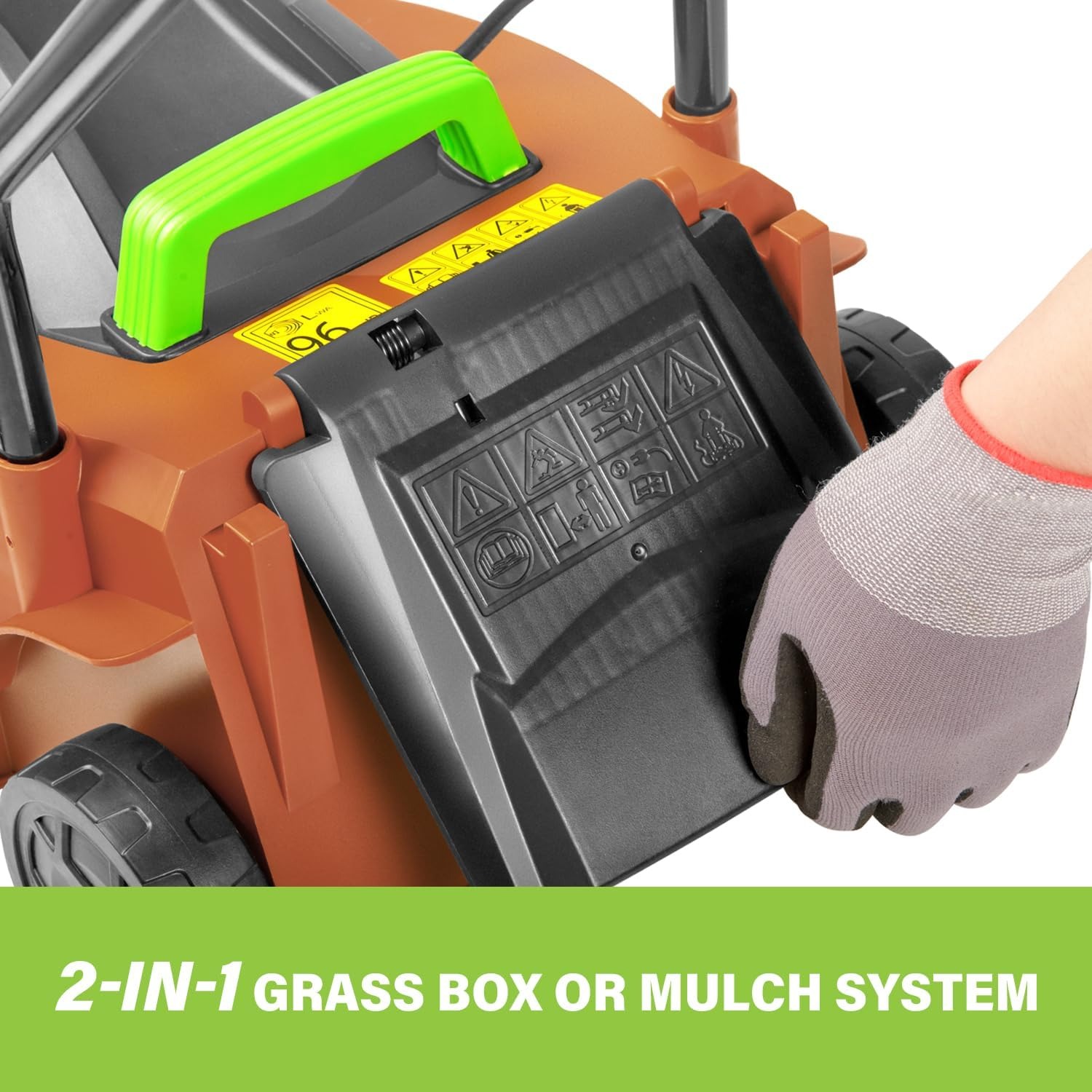
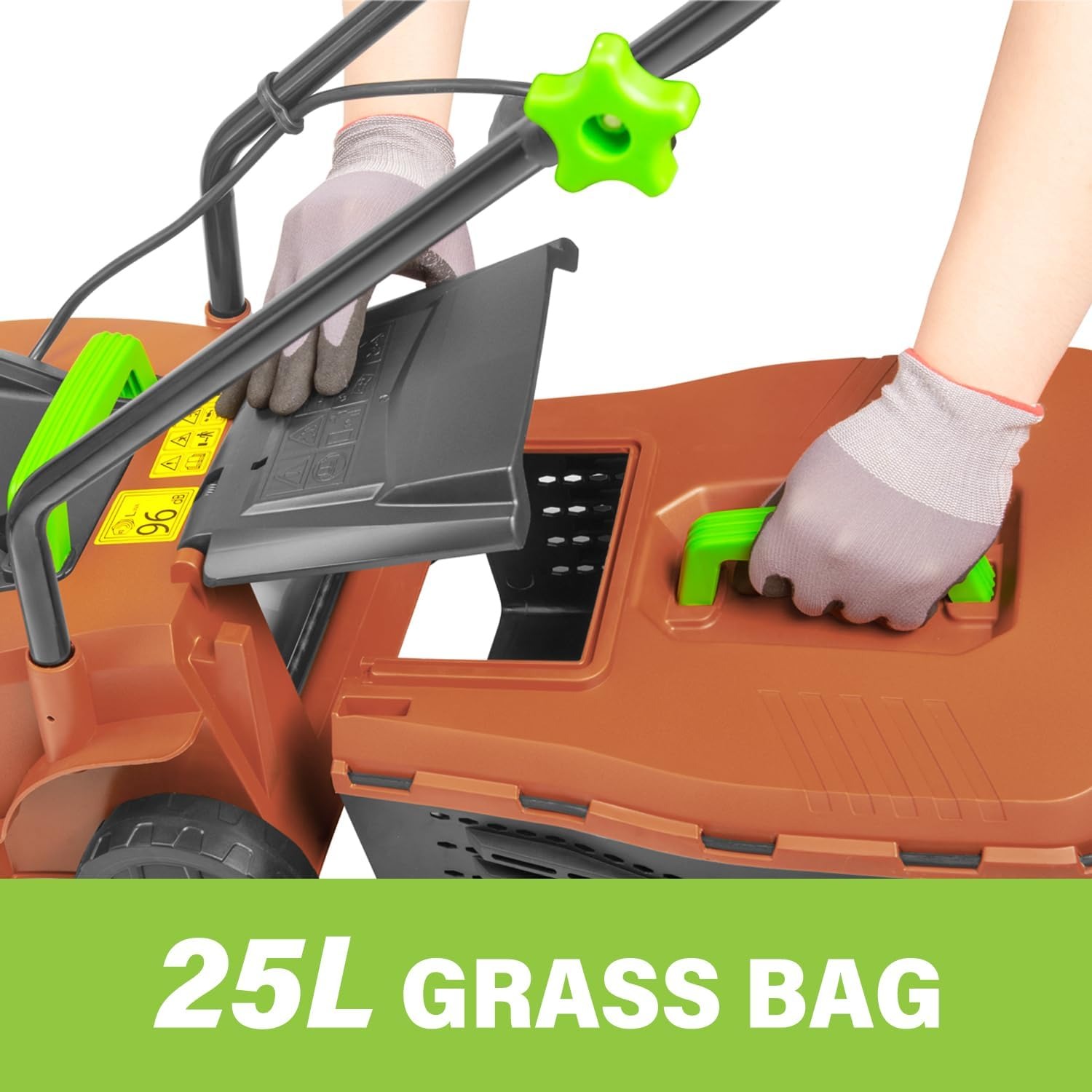
The 2-in-1 part refers to clippings. You either collect them in the grass box or send them back into the lawn as fine mulch. Both have their place, and the mower lets you swap depending on the day.
Why cutting width matters more than horsepower
People focus on wattage and ignore deck width, but width is what actually changes your experience in a small garden.
A 32cm cut is narrow. On a big open lawn that means more passes. On a small lawn it means you can steer. You can run along a fence line without scalping the edge, slip between a garden bed and a path, and spin the mower around the base of a tree without lifting it. The shorter deck also means fewer spots where you have to come back with a trimmer.
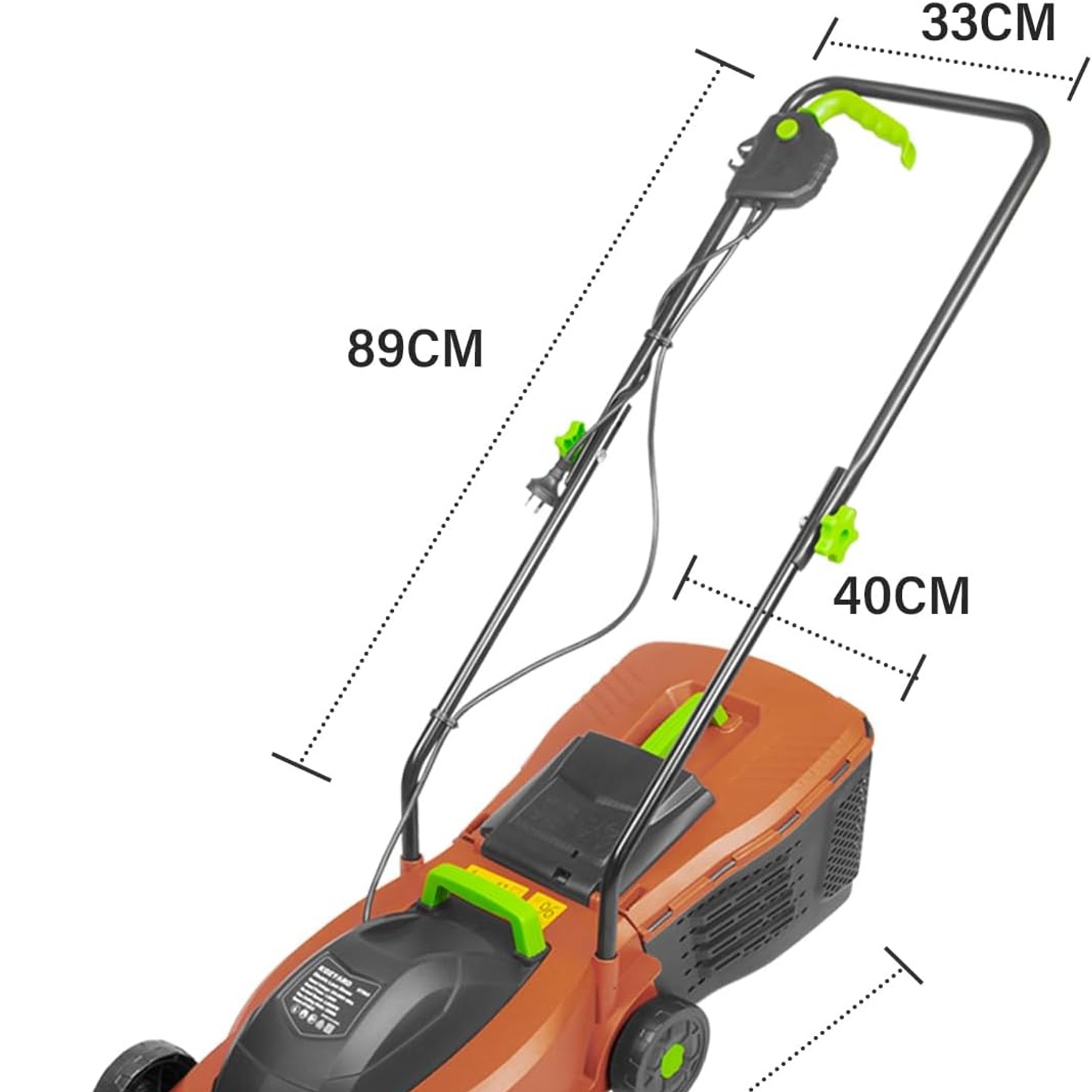
There is a storage benefit too. The mower is 81cm deep, 37cm wide and 94cm tall. That footprint stands neatly in a shed corner or against a garage wall. A full-size mower eats floor space you probably do not have.
If your lawn is bigger than a few hundred square metres, be honest with yourself. A narrow deck and a power lead will start to feel slow. This is a machine for compact spaces, and it is very good in that role.
Getting the cutting height right
Three heights, roughly 25mm, 40mm and 55mm. It sounds basic, but how you use them has a real effect on how your lawn looks through the year.
The 25mm setting gives a short, sharp finish. It looks great for a few days, but it puts stress on the grass because you are taking away the leaf it uses to make food. Use it when the lawn is already short and you mow often, or just before guests arrive.
The 40mm middle setting is where most people should sit most of the time. It gives a tidy result without shaving the plant down, and the lawn recovers quickly between cuts.
The 55mm setting is your hot weather and recovery setting. Longer leaf shades the soil, which keeps moisture in and slows weed seeds from germinating. If you have had a dry spell, or the lawn is looking thin and patchy, raise the height and leave it there for a few mows.
Whatever you choose, try not to remove more than about a third of the grass height in one go. If the lawn has got away from you, cut high first, wait a few days, then cut again lower. Two gentle passes beat one brutal one.
Bagging versus mulching
This is the decision the 2-in-1 design puts in your hands.
Bag the clippings when the grass is long, when it is damp, or when it has gone to seed. Long wet clippings sit on the surface in clumps, smother the lawn underneath and leave yellow patches. Bagging also keeps weed seed heads out of your turf.
Mulch when you are doing a short, routine cut on dry grass. The clippings get chopped fine and fall between the blades where you barely see them. They break down within days and return nitrogen and moisture to the soil. Over a season this is genuinely useful free fertiliser, and it saves you hauling bags to the green bin. If you are shopping for the best mulching lawn mower for home use, that nutrient return is the main reason why.
A good rhythm for most lawns is to mulch through the steady growing weeks and bag after a holiday, after rain, or any time the grass has got ahead of you.
Who this mower suits
It suits someone with a courtyard, a townhouse garden, a nature strip or a modest backyard. It suits someone who wants the mower out and away in twenty minutes. It suits anyone who does not want to store petrol or deal with engine servicing.
It also works well for people who find heavier machines hard to manage. At 9.2 kg, with a push-button start, there is no pull cord to yank and no real weight to wrestle. For anyone who has been borrowing a neighbour's mower because their own was too much to handle, this is a sensible step.
It does not suit acreage, long neglected grass, thick woody weeds, or lawns that are a long walk from any power point. If that describes your place, a battery or petrol machine will serve you better.
Keeping it in good shape
Maintenance on a corded mower is short and dull, which is the point.
Unplug it before you touch anything underneath. After each mow, brush the packed grass off the underside of the deck and around the blade. Use a brush or a blunt stick, never your fingers. Wet clippings left to dry become a hard crust that upsets airflow and makes the next cut worse.
Wipe the housing down with a damp cloth. Avoid directing water at the motor area. Let it dry before putting it away.
Treat the cord with respect. Check it for nicks or crushed sections before each use, coil it loosely rather than winding it tight, and never pull the mower by the lead. A damaged cord is the one failure point that turns a safe machine into an unsafe one.
Once a season, check the blade. A dull edge tears grass rather than cutting it, which leaves brown, frayed tips a day or two after you mow. If your lawn always looks slightly ragged, a blunt blade is usually the reason.
The short version
If you have a small lawn and you are sick of fighting equipment, a corded electric mower is the easy answer. This one gives you 1300W of motor, a 320mm cut, three heights between 25mm and 55mm, and the choice to bag or mulch. It weighs 9.2 kg and packs into an 81 x 37 x 94cm space.
You trade range for simplicity. No fuel, no charging, no service schedule. Just an extension lead and a few minutes of your weekend.
For a courtyard, a strip of lawn out front, or a backyard you can cross in a few strides, that trade is usually the right one.