
The complete guide
Choosing a Cordless Mower for a Small Garden, A Practical Buyer's Guide
The problem with mowing a small lawn
Small lawns are awkward. They are too big to cut with shears and too small to justify a machine built for a paddock. If you have ever pushed a wide petrol mower around a courtyard, you will know the feeling: half your effort goes into three-point turns, and the mower spends more time reversing than cutting.
Corded electric mowers solve the weight problem but create a new one. Every mow starts with unwinding a lead and ends with winding it back up. In between you are constantly aware of where the cable is, flicking it over your shoulder so you do not run it over. In a garden with a path, a washing line and a raised bed, that is a lot of cable management for fifteen minutes of actual cutting.
A cordless mower removes both problems at once. There is no engine to start and no cable to manage. You press, you mow, you put it away. For a lawn you can finish in one session, that simplicity is worth more than raw power.
How this one works
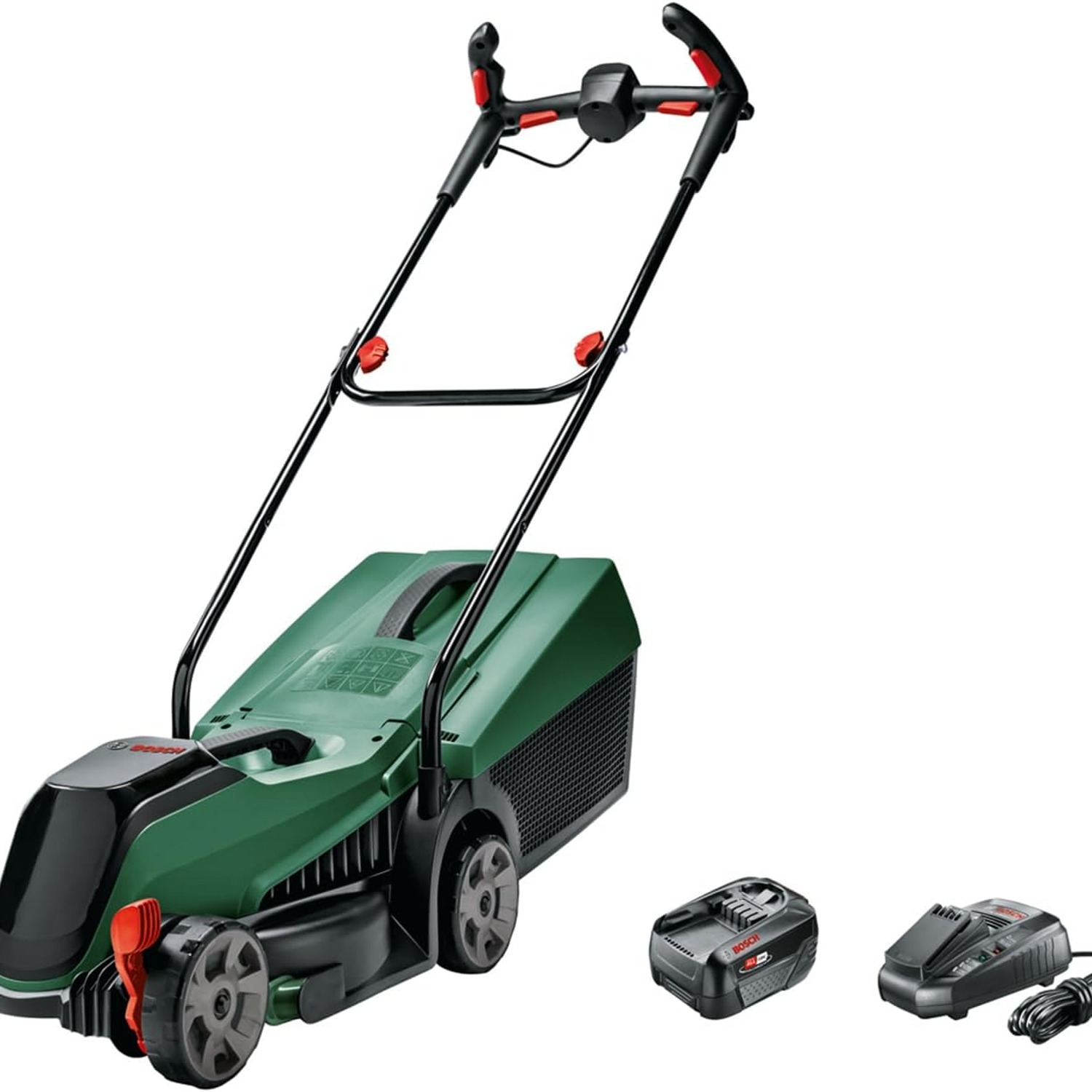
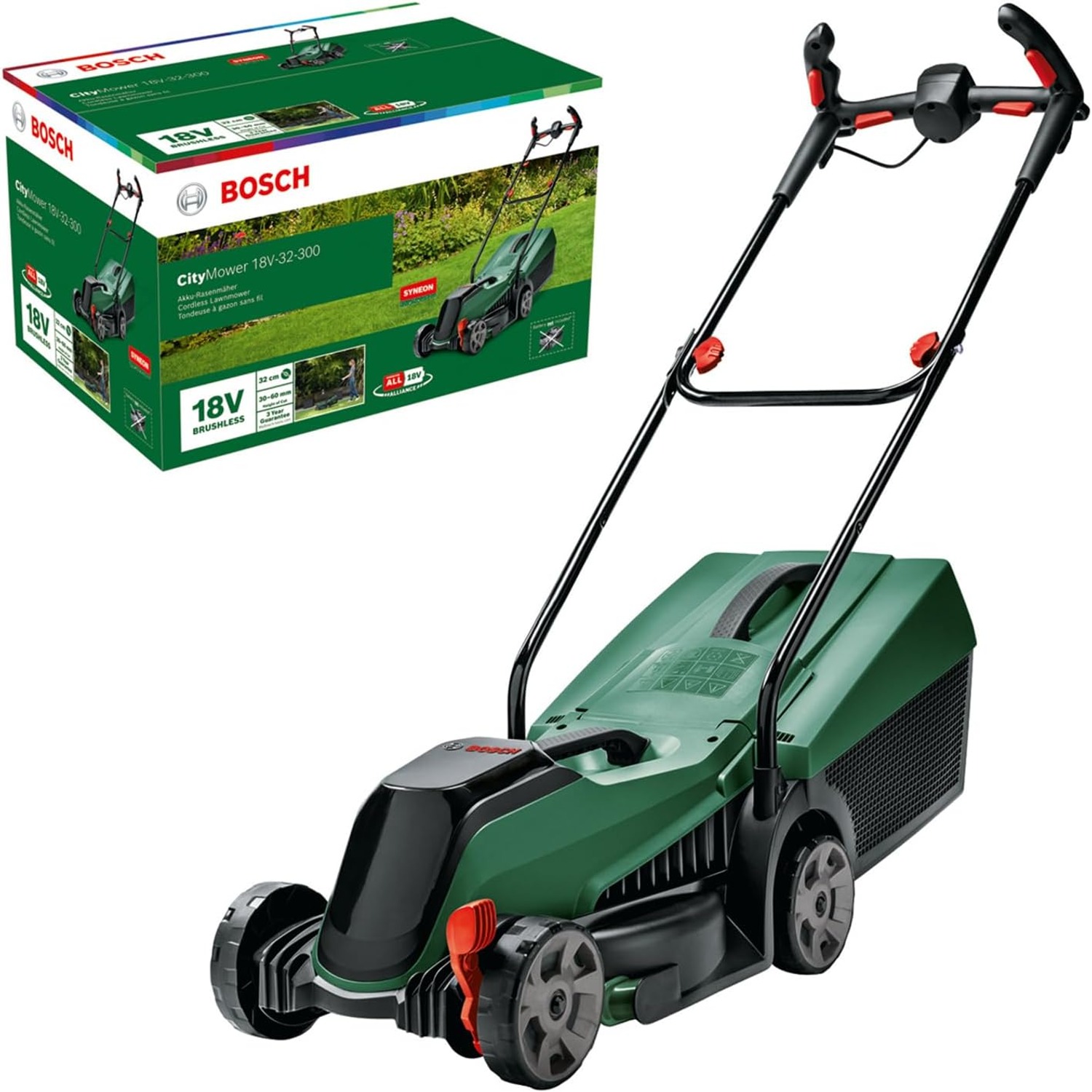
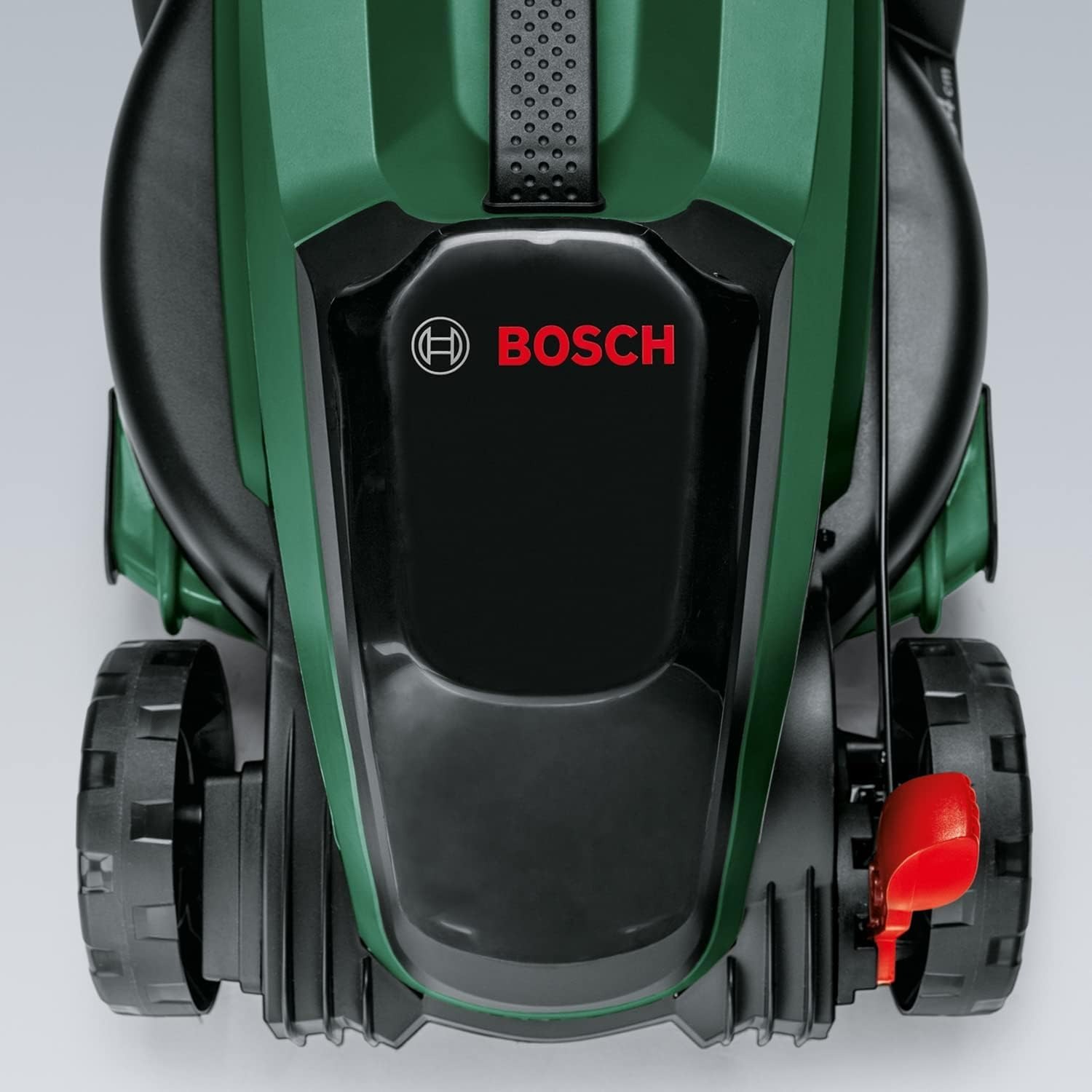
The CityMower 18V-32-300 is a 32 cm cut push mower running on an 18V battery. The kit includes one 4.0Ah battery and a fast charger, so it is ready to use once the pack has had its first charge.
The motor is brushless. That word gets used as marketing shorthand, but the engineering behind it is real. Older motors use carbon brushes pressing against a spinning contact to deliver current. Those brushes create friction, heat and wear. A brushless motor uses electronics to switch the current instead, so there is no rubbing contact. Less energy is wasted as heat, more of the battery goes into turning the blade, and there is one fewer wear part inside the housing. For a battery tool, where every watt counts, that efficiency translates directly into how much lawn you get done per charge.
Cutting height is set across three positions, covering 30 mm at the lowest to 60 mm at the highest. That is a sensible range for a home lawn. Very short cutting stresses grass and encourages weeds, while anything much longer than 60 mm starts to look unkempt. Three positions keep the choice simple.
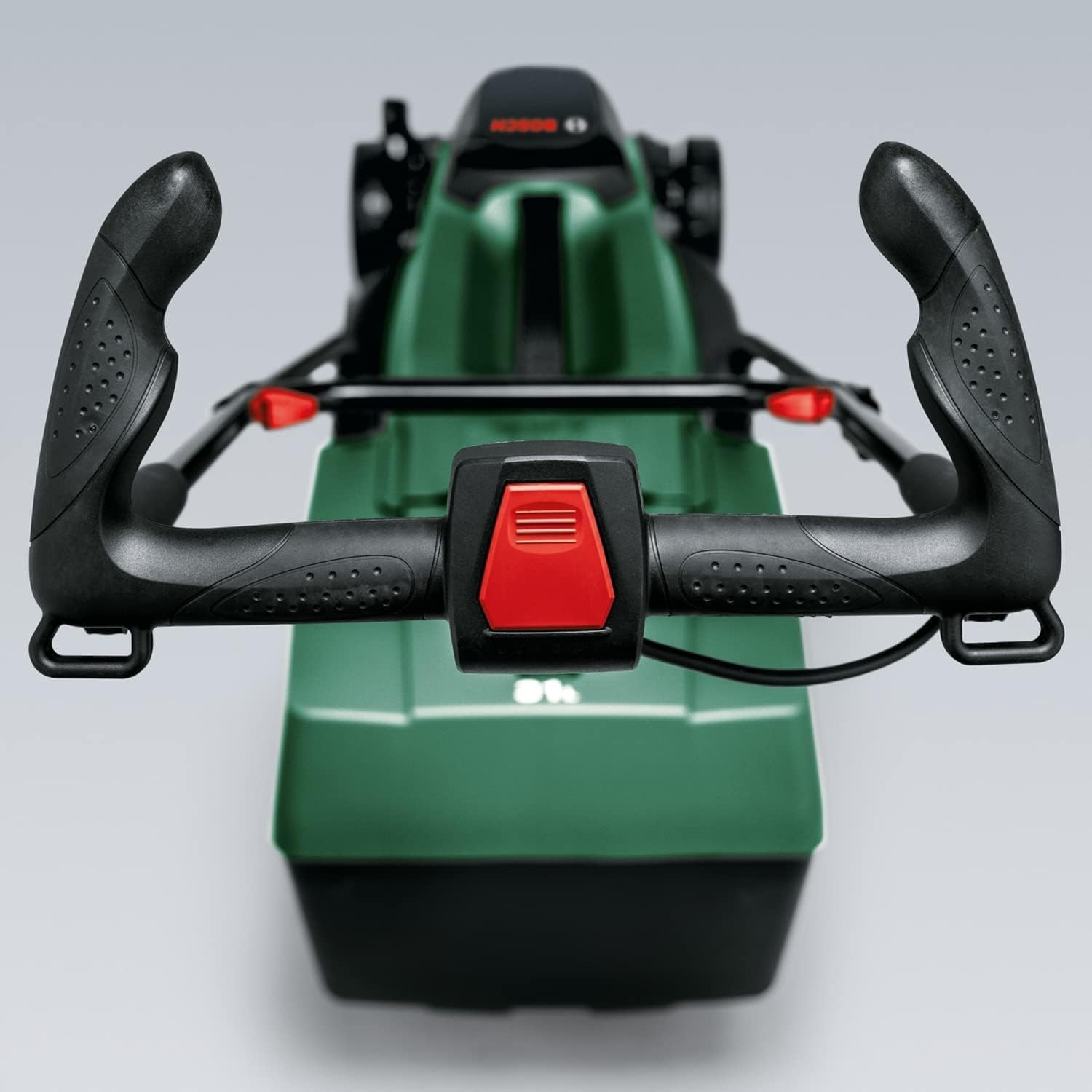
The handles are the ErgoFlex type and adjust for height. This sounds like a minor detail until two people of different heights share the same mower. Pushing with the handle set too low means bending forward, which your lower back will complain about within a few minutes.
Grass combs run along the edge of the deck. They lift and guide grass that grows tight against a wall, fence or edging stone so the blade can reach it. You will still need a trimmer for truly awkward corners, but the amount of hand-tidying drops.
Who it suits
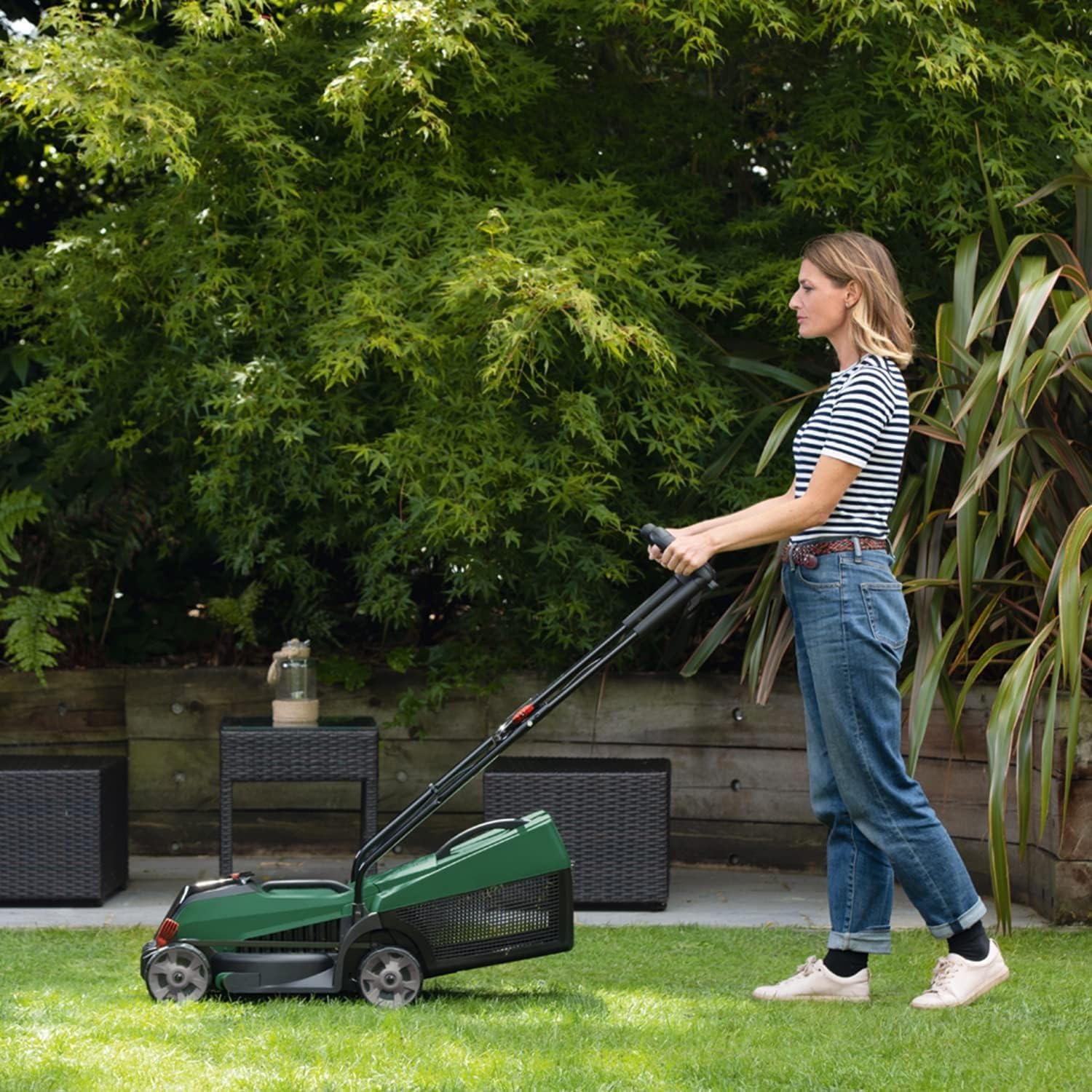
This is a mower for a small to modest garden. Think a front lawn, a back courtyard, a strip beside a driveway, or a townhouse garden you can walk across in a few seconds. At 11.3 kg it is light enough to carry through a side gate or lift over a step.
It also suits people who want gardening to be low-fuss. There is no fuel to buy and store, no oil, no spark plug, no winter service. The maintenance list is short: clean the deck, keep the blade sharp, store the battery somewhere dry.
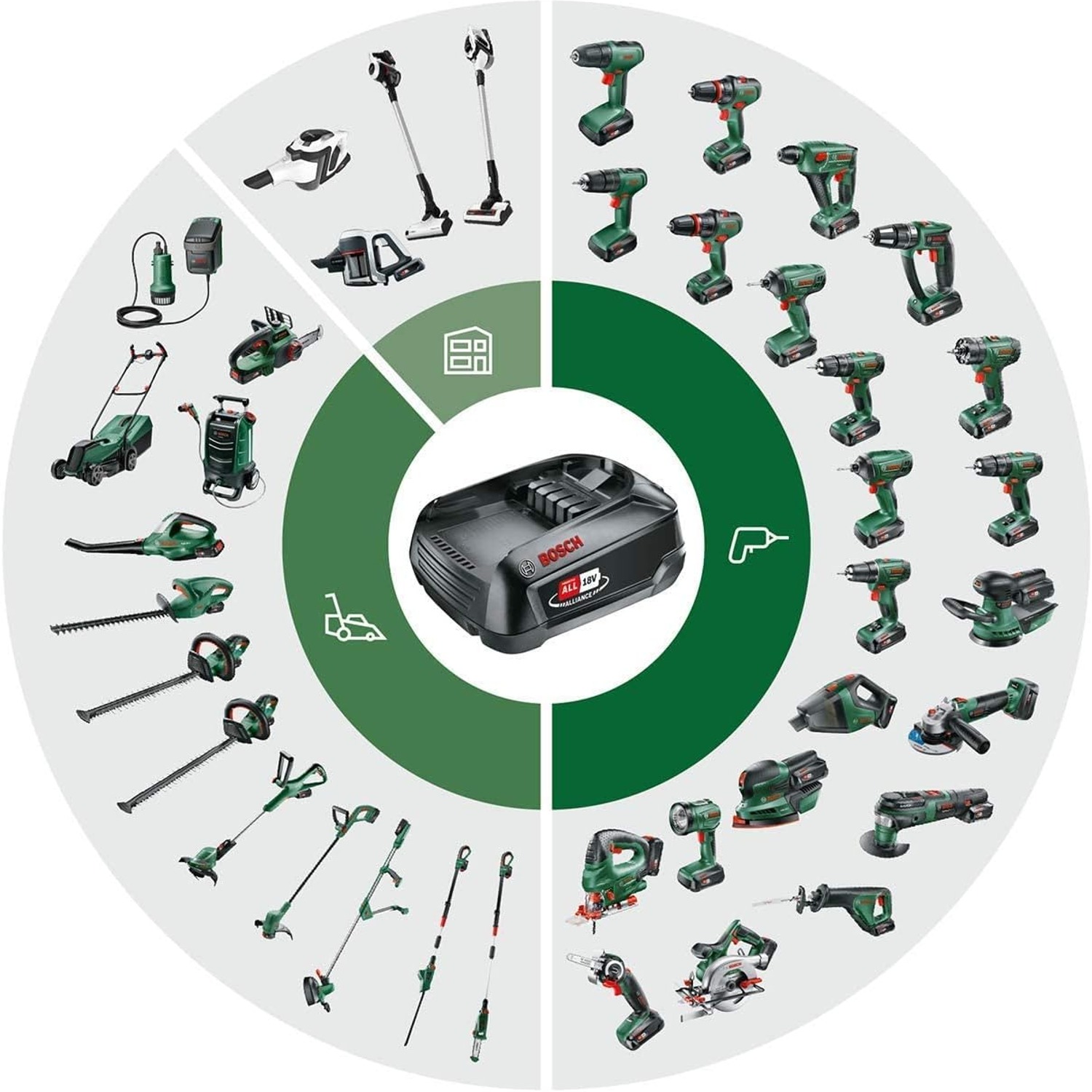
Households already using 18V tools from the same Bosch Home & Garden system get an extra benefit. The battery is shared across the range, so a trimmer or blower bought later runs on the same pack. If you are starting from nothing, this kit gives you the first battery, which makes adding a second tool cheaper down the line.
It is not the right mower for a big open lawn, rough ground, or grass that regularly gets left long enough to go to seed. A narrow deck and a single battery will make that a chore.
How to choose between cordless mowers
Start with lawn size, because everything else follows from it. Measure roughly, in strides if you have to. A narrow 32 cm deck is efficient in a tight, obstacle-filled garden and inefficient on a wide open one. Wider decks are the opposite.
Then look at the battery situation. A mower sold as a bare tool is cheaper on the shelf but needs a battery and charger added, which often costs more than the difference. A battery lawn mower with charger included is usually the better value unless you already own compatible packs. Ask whether the battery fits anything else you own or might buy.
Weight is the next thing. A few kilograms sounds trivial when you are reading a spec sheet and feels very different when you are lifting a mower over a step with one hand and holding a gate with the other. Anything around the 11 kg mark is easy for most people to handle.
Check the cutting height range against what you actually want. Some people like a short, formal finish. Others keep grass longer because it stays greener in dry weather and needs less watering. A 30 mm to 60 mm range covers both approaches comfortably.
Finally, think about where it lives. A compact mower that stands against a shed wall is one you will use. One that has to be wrestled out from behind the bikes every time will quietly stop getting used.
Getting a good cut
Mow regularly rather than occasionally. The old rule is to take off no more than a third of the grass height in one pass. If you only mow when the lawn looks bad, you are asking the machine to cut long, thick grass in one go, which drains the battery faster and leaves clumps behind.
Mow when the grass is dry. Wet grass sticks to the underside of the deck, clogs around the blade and comes out in wet lumps rather than a fine scatter. The cut quality drops and the clean-up afterwards takes longer than the mow did.
Vary your direction. Cutting the same way every time trains the grass to lean, which leaves stripes that are not the good kind. Alternating between going across and going lengthways gives a more even finish.
Keep the blade sharp. A dull blade tears the grass rather than slicing it, and torn tips go brown at the ends within a day or two. If the lawn looks slightly beige after mowing, the blade is usually the culprit.
Looking after the mower and the battery
Always remove the battery before you clean, check or store the mower. It takes two seconds and removes any chance of the blade turning while your hands are near it.
Clear the clippings off the deck after each mow, once everything has stopped moving. Dried-on grass builds up into a hard layer that narrows the space the clippings need to travel through, and a clogged deck cuts worse.
Store the mower in a dry place. Plastic decks do not rust, but bearings, fasteners and electronics still prefer not to sit in damp. Keep the battery out of frost and away from direct heat, and give it an occasional top-up charge if the mower is sitting idle over winter. Lithium packs are happiest kept partly charged rather than left completely flat for months.
Use the supplied charger. It is matched to the pack and manages the charge cycle properly.
The short version
If your lawn is small, if you are tired of cables, and if you do not want to own a petrol engine, this 18V cordless lawn mower kit covers the job neatly. You get a brushless motor, a 32 cm cut, three heights from 30 mm to 60 mm, adjustable handles, grass combs for edges, and an 11.3 kg body that is easy to move and store. The 4.0Ah battery and fast charger come with it, and that battery works across the wider 18V system if you add tools later.
For a courtyard, a front lawn or a townhouse garden, that is a sensible setup. For a large open lawn, look at something wider.